You’d Cite It. Why Wear It?
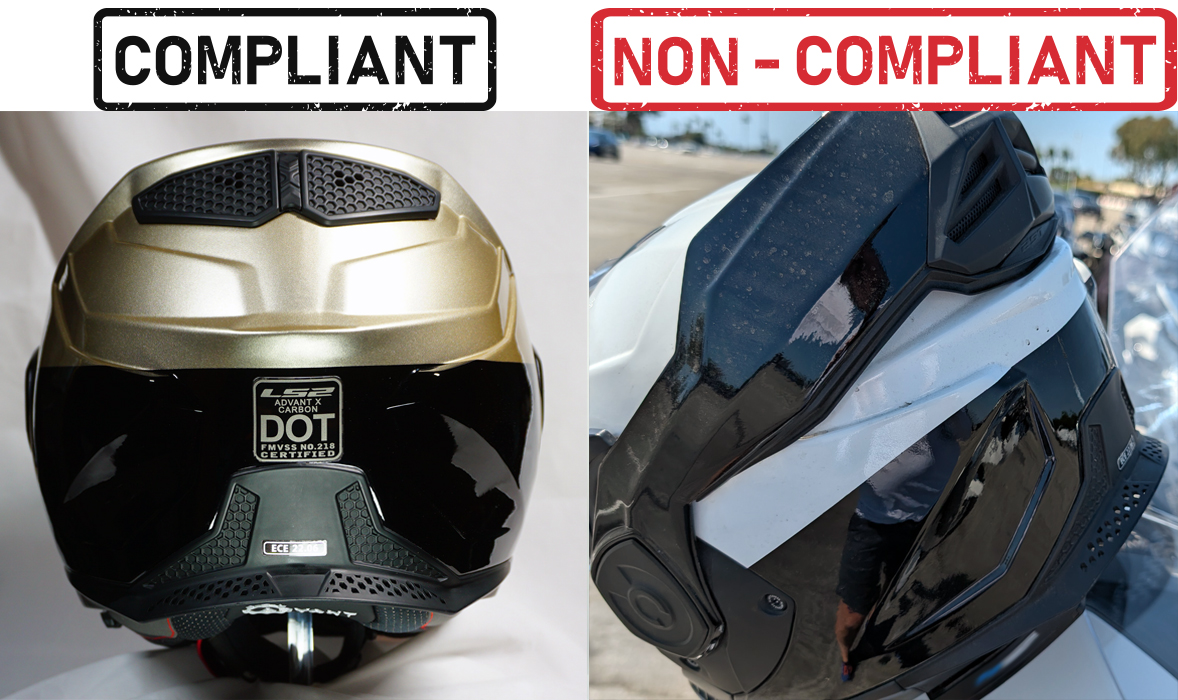
If the DOT label is missing or obstructed, the helmet is not compliant. Period.
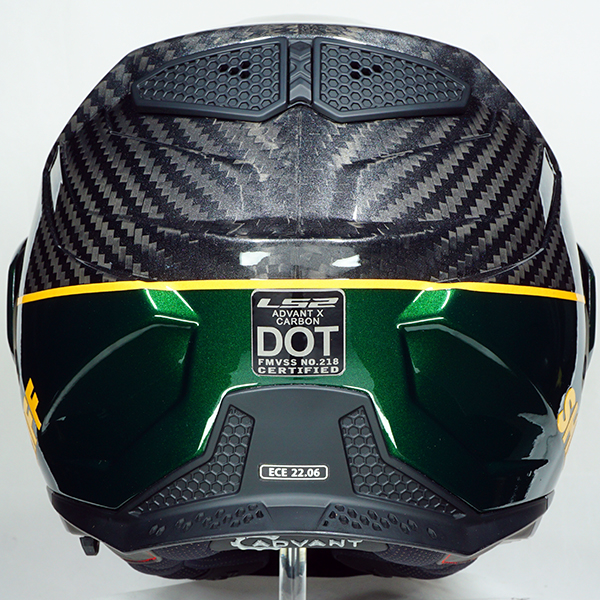
Look at the back of the helmet above.
See what’s missing?
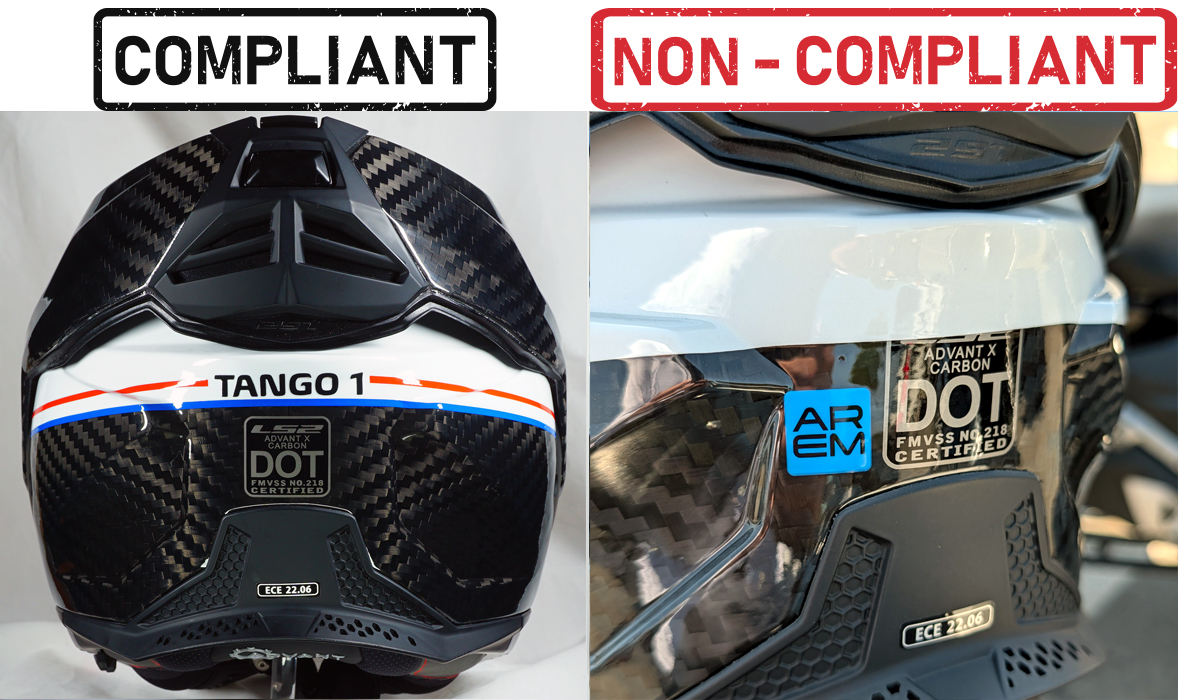
The federally required DOT certification label has been painted over.
That single shortcut makes this “police helmet” non-compliant for on-road use.
And that’s not a branding opinion.
That’s federal regulation.
What Federal Law Actually Requires
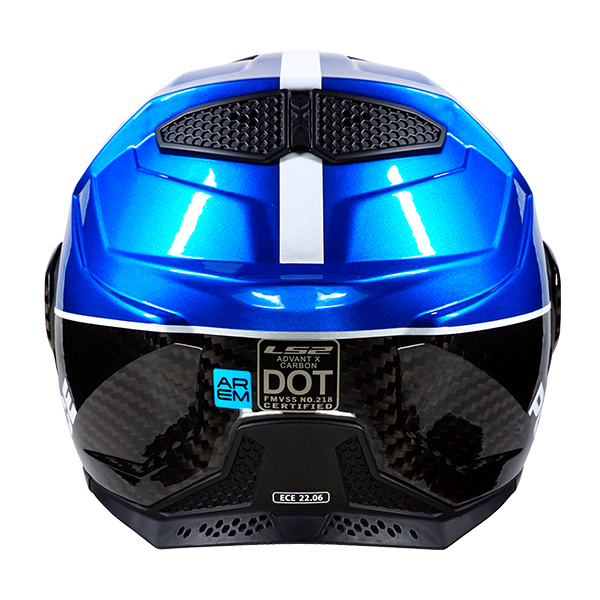
Under FMVSS 218 (Federal Motor Vehicle Safety Standard No. 218), every motorcycle helmet intended for street use in the United States must:
-
Display the letters “DOT” on the exterior rear of the helmet
-
Use lettering at least 3/8 inch (9.5 mm) high
-
Maintain that label in a permanent, legible, unobstructed condition
-
Include internal manufacturer labeling with model, size, and month/year of manufacture
If that exterior DOT label is:
-
Removed
-
Painted over
-
Obscured
-
Covered by clear coat
-
Wrapped
-
Altered
The helmet may no longer legally represent DOT compliance.
No label.
No compliance.
Here’s the Bigger Question
If someone is willing to cut corners on something as visible and basic as DOT labeling…
What corners were cut that you can’t see?
Specifically:
-
Were approved coatings used?
-
Were the correct solvents selected?
-
Was the chemical interaction with the EPS impact liner evaluated?
-
Was the helmet masked properly before paint?
-
Was compliance verified after finishing?
Because this matters.
Paint Chemistry Is Not Cosmetic
Inside every compliant motorcycle helmet is an EPS (expanded polystyrene) energy-absorbing liner.
That liner is engineered to:
-
Crush under impact
-
Absorb kinetic energy
-
Reduce brain trauma
Certain paints, reducers, and solvents can:
The damage is often invisible.
The helmet may look perfect.
But its performance may not be.
So ask yourself:
If someone ignored federal labeling requirements for aesthetics…
are you confident they respected the chemistry that protects your head?
Are you willing to take that chance?
 Why This Matters for Law Enforcement
For civilian riders, a non-compliant helmet is a problem. Penalties include:
- Traffic Stop & Citation
- Possible Points on License
- Court Appearance
- Insurance Consequences (More Serious)
For motor officers and agencies, it’s a liability multiplier.
Officer-Level Risk
-
Increased exposure in post-incident review
-
Policy violation implications
-
Insurance complications
-
Injury litigation scrutiny
Agency-Level Risk
And all of it stems from one avoidable shortcut.
Custom Paint Is Not an Excuse
Customization is not the problem.
Corner-cutting is.
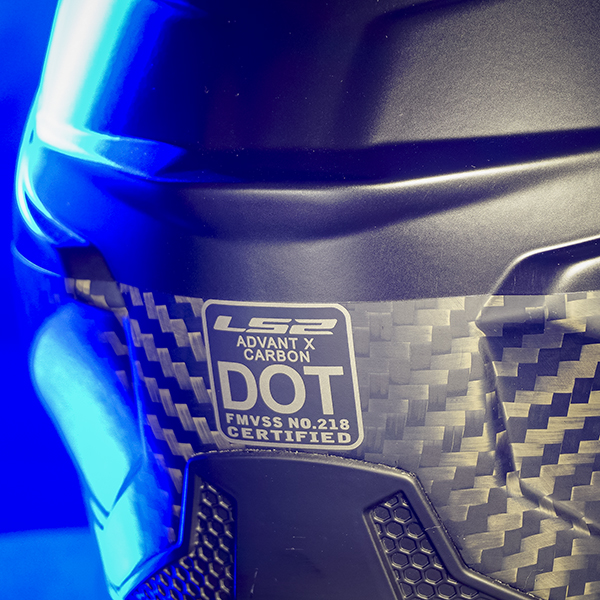
Masking a DOT label properly:
-
Takes time
-
Requires discipline
-
Slows production
-
Costs more
Using approved coatings:
Some vendors prioritize appearance and speed.
Super Seer prioritizes compliance and protection.
The Super Seer Standard
At Super Seer, we refuse to compromise legality for aesthetics.
That means:
-
DOT labels are properly masked and preserved
-
Certification markings remain visible and legible
-
Only approved coatings and solvents are used
-
Chemical compatibility with EPS liners is respected
-
Compliance is verified before a helmet leaves our facility
We don’t treat the DOT label as decoration.
We treat it as what it is:
A declaration of federal compliance.
Professional Helmets Should Never Be Illegal
Motor officers enforce the law every day.
The equipment they wear should meet the same standard.
If the DOT label is missing, the compliance is missing.
If compliance is missing, the risk is real.
Precision matters.
Compliance matters.
Officers matter.
See What Compliance Looks Like
Learn how Super Seer masks, paints, and protects certification the right way — without cutting corners and without compromising safety.